
Currently Empty: ₨0.00
0 Comments
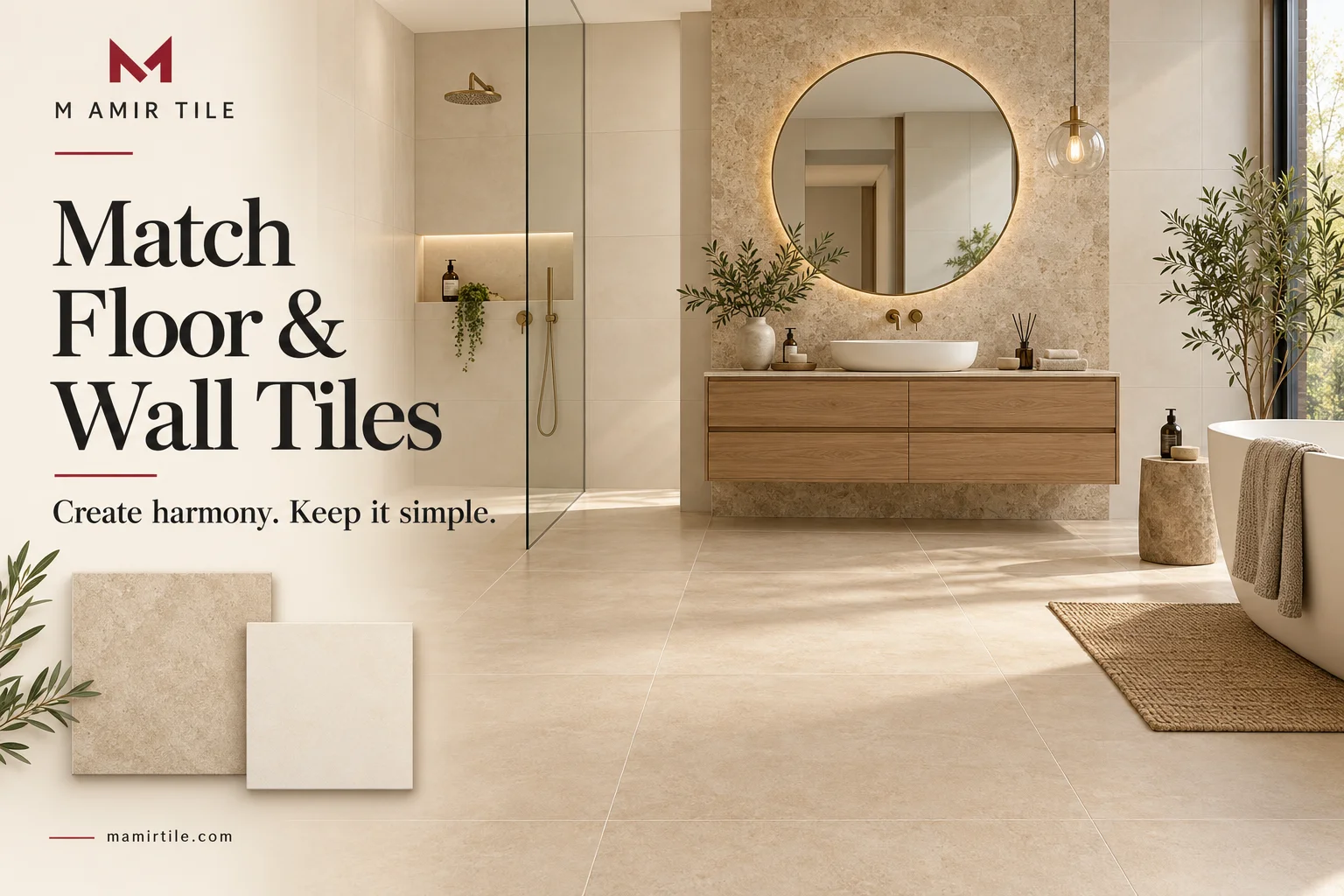
Choosing tiles for your home is not only about finding a beautiful design. Floor and wall tiles need to work together so the room feels balanced, spacious, and stylish.
Many homeowners in Islamabad and Rawalpindi make one common mistake: choosing attractive floor tiles and attractive wall tiles separately. As a result, both may look good on their own but create a busy or mismatched room when used together.
The good news is that matching floor tiles with wall tiles is easier when you follow a few simple design principles.
In this guide, we’ll explain how to choose floor and wall tiles, which tile colours work together, how to combine patterns, and how to avoid an overcrowded look.
How Should Floor Tiles and Wall Tiles Match?
Floor and wall tiles do not need to be exactly the same. Instead, they should have a visual connection through colour, texture, pattern, size, or finish.
A simple rule is:
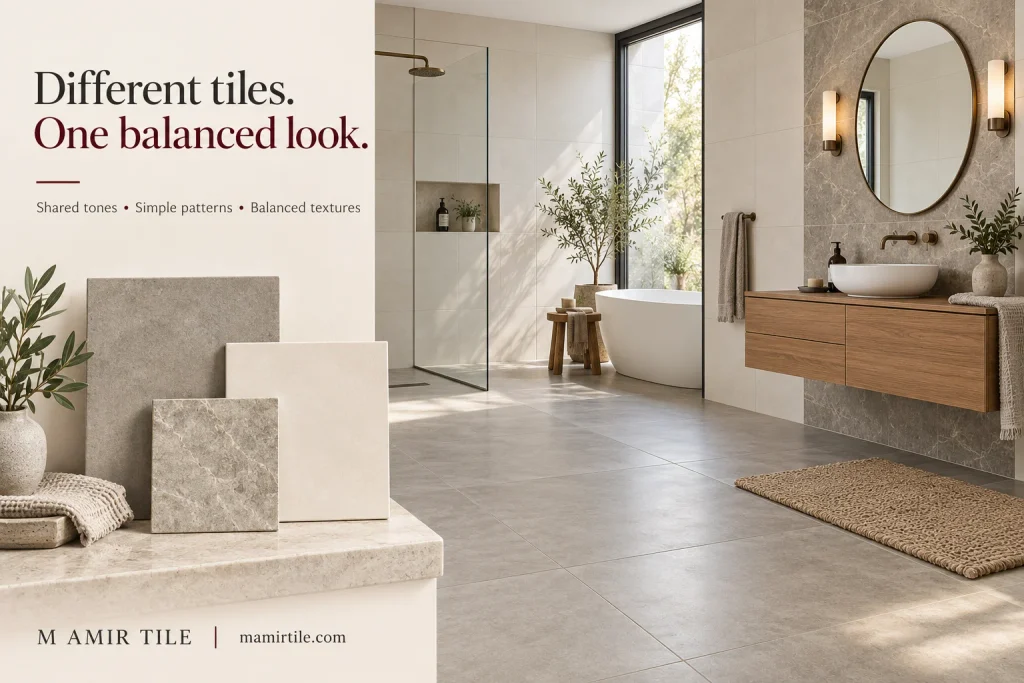
If your floor is visually strong, keep the walls simpler. If your walls have a bold design, choose a calmer floor.
This creates contrast while keeping the overall room balanced.
1. Start With One Main Tile
Before choosing several different tiles, select one tile as the main design element.
For example:
- Bold patterned floor → simple wall tiles
- Marble-effect floor → plain or lightly textured walls
- Decorative wall tiles → neutral floor
- Dark floor → lighter walls
- Light floor → slightly darker or textured walls
This approach prevents too many patterns from competing for attention.
2. Match Tile Colours, Not Necessarily Tile Designs
One of the easiest ways to coordinate floor and wall tiles is through colour.
You can choose different tile designs while keeping their colours within the same family.
| Floor Tile Colour | Recommended Wall Tile Colours |
|---|---|
| White | Light grey, beige, cream |
| Grey | White, charcoal, light grey |
| Beige | Cream, ivory, warm white |
| Brown | Beige, cream, light taupe |
| Black | White, grey, marble |
| Wood-effect | Cream, beige, warm white |
For example, a grey floor tile with a white wall tile creates a clean and modern appearance. Similarly, beige floor tiles can work beautifully with cream or ivory walls for a warmer look.
3. Use the 60-30-10 Colour Rule
The 60-30-10 rule can also help when designing tiled spaces.
A simple interpretation is:
- 60% – dominant colour
- 30% – secondary colour
- 10% – accent colour
For example, in a bathroom, you could use:
60%: Light wall tiles
30%: Grey floor tiles
10%: Decorative accent tiles
As a result, the room gets visual interest without looking overloaded.
4. Be Careful When Mixing Patterns
Patterned tiles can completely change the appearance of a room. However, using multiple strong patterns can quickly make the space look crowded.
If Your Floor Has a Pattern
Choose:
- Plain wall tiles
- Soft textures
- Minimal grout contrast
- Neutral colours
If Your Wall Has a Pattern
Choose:
- Plain floor tiles
- Natural stone-effect tiles
- Subtle textures
- Neutral shades
One strong pattern is usually enough.
5. Consider Tile Size Before Making a Choice
Tile size also affects how spacious a room feels.
Large-format tiles can create a cleaner appearance because there are fewer grout lines. On the other hand, smaller tiles can add texture and character.
For smaller bathrooms, kitchens, and rooms, consider:
- Light-coloured tiles
- Larger tile formats
- Similar wall and floor colour families
- Minimal decorative patterns
This can help create a more open visual effect.
6. Should Floor and Wall Tiles Be the Same?
No, floor and wall tiles do not have to be the same.
In fact, using slightly different tiles often creates a more sophisticated design.
For example:
Option 1:
Grey marble-effect floor + plain white walls
Option 2:
Beige floor + cream textured walls
Option 3:
Wood-look floor + soft white walls
Option 4:
Dark grey floor + light grey walls
The key is to maintain a connection between the two surfaces.
7. Match the Finish as Well as the Colour
Colour is important, but the tile finish also matters.
For example, combining a highly glossy wall tile with a heavily textured floor may create too much visual contrast.
For a balanced interior, consider:
- Glossy wall + matte floor → practical and modern
- Matt floor + subtle wall texture → elegant and understated
- Natural stone-look floor + simple wall → timeless appearance
- Wood-look floor + plain wall → warm and contemporary
For floors, practicality should also come first. A tile should provide suitable grip and durability for the space.
Best Floor and Wall Tile Combinations
Here are some combinations that work well in modern homes:
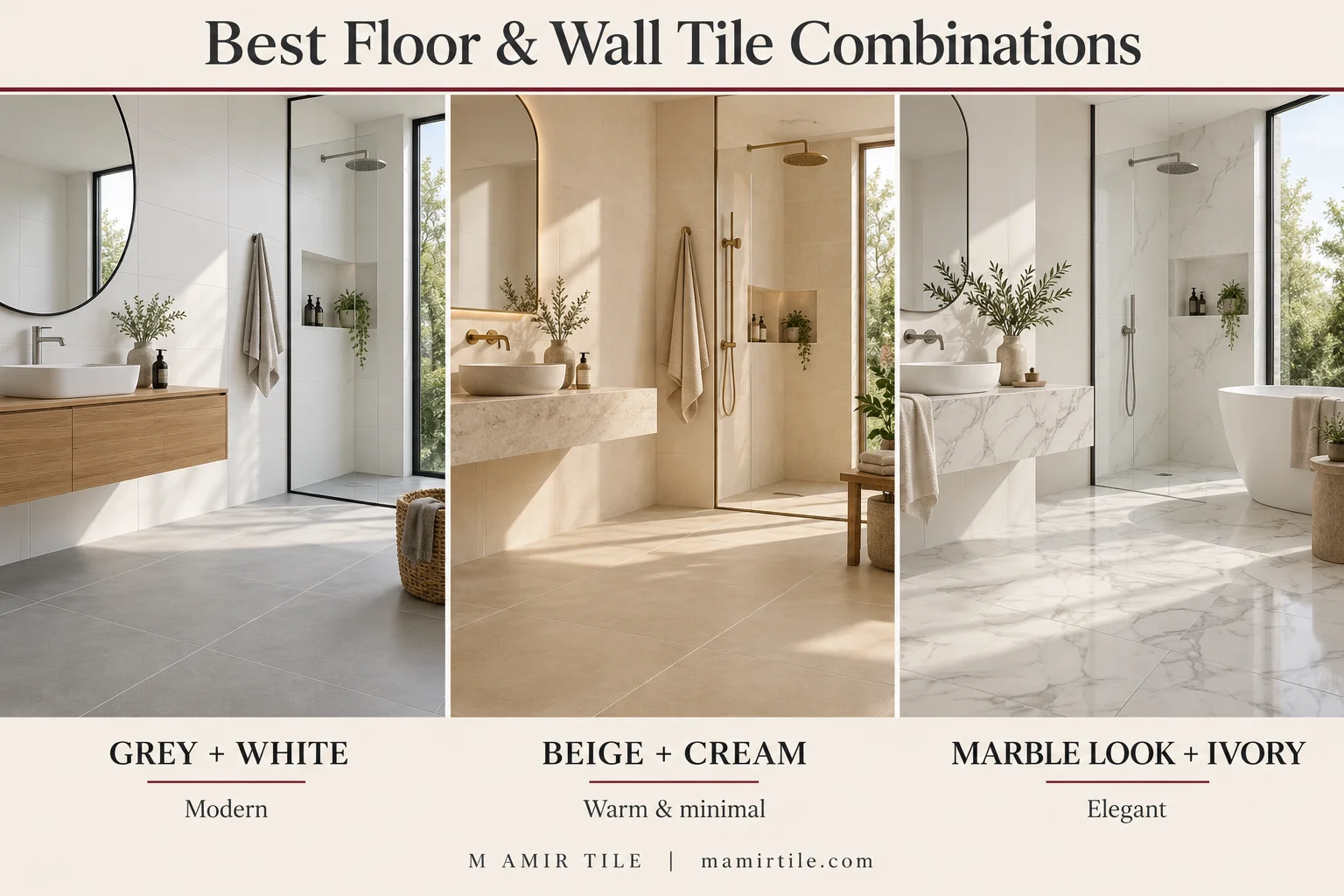
| Style | Floor Tile | Wall Tile | Overall Look |
|---|---|---|---|
| Modern | Grey | White | Clean & contemporary |
| Minimal | Beige | Cream | Soft & spacious |
| Luxury | Marble-effect | Plain white | Elegant |
| Warm | Wood-effect | Beige | Comfortable |
| Bold | Dark grey | Light grey | Dramatic |
| Classic | Stone-effect | Ivory | Timeless |
Common Mistakes to Avoid
When choosing floor and wall tiles for your home, avoid these common mistakes:
- Using several bold patterns together
- Choosing completely unrelated colours
- Ignoring the size of the room
- Using dark tiles everywhere in a small space
- Choosing floor tiles only for their appearance
- Mixing too many tile finishes
- Ignoring grout colour
- Following trends without considering the rest of the interior
Instead, focus on balance, practicality, colour coordination, and your home’s overall style.
Where to Find Quality Tiles in Islamabad?
If you’re looking for tiles for a new home, renovation, bathroom, kitchen, or commercial project, M Amir Tile offers a range of tile products and related materials to help you create a coordinated interior.
You can explore different floor tiles, wall tiles, designs, finishes, sizes, and tile-related products before making your final selection.
For homeowners searching for tiles in Islamabad, visiting a local tile supplier can also help you compare colours and finishes in person. This is particularly useful because tile colours can look different under showroom, daylight, and indoor lighting.
FAQ’s
Can floor tiles and wall tiles be different?
Yes. They can be different in colour, pattern, size, and finish. However, they should share at least one visual element, such as a similar colour family or design style.
Should bathroom floor and wall tiles match?
They do not have to match exactly. A coordinated combination of floor and wall tiles usually creates a more interesting and balanced bathroom.
What colour wall tiles go with grey floor tiles?
White, light grey, beige, cream, and marble-effect wall tiles can all work well with grey flooring.
Which tiles make a small room look bigger?
Light-coloured and larger-format tiles can make a small room appear more spacious. Using similar tones on the floor and walls can also create visual continuity.
Where can I buy tiles in Islamabad?
M Amir Tile is a local tile supplier in Islamabad where homeowners can explore different tile options for residential and commercial spaces.
Final Thoughts
Matching floor tiles with wall tiles does not mean making everything identical. Instead, the goal is to create harmony between colours, patterns, sizes, and finishes.
Start with one main tile, keep bold designs under control, and use complementary colours for the remaining surfaces. Most importantly, choose tiles according to the room’s size, lighting, purpose, and overall interior style.
With the right combination, even simple tiles can create a home that feels modern, spacious, and beautifully coordinated.