
Currently Empty: ₨0.00
0 Comments
Planning to build a new house or renovate your existing home? Understanding the tiles price in Pakistan can help you choose the right flooring, wall tiles, and exterior finishes without exceeding your budget.
Tiles are available in different materials, sizes, designs, finishes, and quality grades. Therefore, two tiles that look similar may have very different prices. For example, standard ceramic tiles are generally more affordable, while premium porcelain, large-format slabs, and imported designs can cost considerably more.
Moreover, the total cost of a tiling project includes more than the price of the tiles. You also need to consider tile adhesive, labour, grout, cutting waste, and surface preparation.
In this guide, we explain tile prices by type and size, compare different quality options, and show you how to calculate your budget. We also explain how to choose suitable tiles for bedrooms, kitchens, bathrooms, living rooms, and outdoor areas.
Whether you are building a 5 Marla house, a 10 Marla house, or a larger property, this practical guide will help you make a more informed buying decision.
Quick Answer: What Is the Price of Tiles in Pakistan?
Tile prices in Pakistan vary according to material, size, finish, brand, and supplier. As a general planning estimate, locally manufactured ceramic and porcelain tiles may start around PKR 90–350 per square foot, while premium and imported options can range from approximately PKR 250–800 or more per square foot.
These are indicative market ranges, not confirmed prices for every product or city. Actual rates may fall outside these ranges, particularly for economy products and luxury imported slabs. Check current availability and quotations before purchasing.
Tiles Price in Pakistan by Type
Different tile materials offer different levels of durability, water resistance, appearance, and maintenance requirements. Therefore, the cheapest option is not always the most suitable one.
The following table provides a starting point for comparing common tile categories.
| Tile type | Indicative price per sq. ft. | Best suited for |
|---|---|---|
| Ceramic tiles | PKR 90–200 | Walls, kitchens and selected residential floors |
| Standard porcelain tiles | PKR 130–350 | Bedrooms, living rooms and regular-use floors |
| Premium porcelain tiles | PKR 350–800+ | Premium interiors and large-format flooring |
| Wooden-look tiles | PKR 150–400+ | Bedrooms, living rooms and feature areas |
| Imported designer tiles | PKR 250–800+ | Luxury interiors and statement walls |
| Textured outdoor tiles | Varies by product | Terraces, patios and exterior areas |
Price guide: indicative estimates compiled from published Pakistani market guides available in 2026. Ranges overlap because size, brand, grade, finish, and origin affect the price. Obtain a current quotation for the exact design you want.
For example, a standard ceramic tile may be suitable for a kitchen wall, whereas a dense porcelain tile may be a better choice for a frequently used floor. Similarly, textured tiles can offer better grip outdoors than highly polished surfaces.
Tiles Price in Pakistan by Size
Tile size affects the overall appearance of a room, the number of pieces required, and sometimes the installation cost. However, a larger tile is not automatically more expensive per square foot. The material, finish, brand, and manufacturing quality also matter.
1. 12×12-Inch Tiles
These smaller tiles can work well in selected kitchens, utility areas, bathrooms, and compact spaces.
Consider them when:
- You need an economical option.
- Your room has several corners or narrow sections.
- You want a traditional tile layout.
Before buying, check whether the tile is designed for walls or floors because their intended applications can differ.
2. 16×16-Inch Tiles
This size can be a practical choice for smaller rooms and selected residential floors. It also provides a middle ground between smaller traditional tiles and modern large-format designs.
However, check the available designs and quality grades before making a decision.
3. 24×24-Inch Tiles
The 24×24-inch format is a popular option for bedrooms, living rooms, dining areas, and other residential spaces.
Its larger surface can create a cleaner appearance because fewer tile joints are needed than with smaller tiles covering the same area.
Nevertheless, the result depends on proper floor preparation, alignment, and installation.
4. 24×48-Inch Tiles
Large-format tiles can give living rooms, entrances, and feature areas a spacious, contemporary look.
They may also reduce the number of grout lines. On the other hand, installation requires suitable surface preparation, careful handling, and an appropriate fixing method.
Therefore, consider the installation requirements before selecting this size.
5. Wooden-Look Tiles
Wood-effect tiles combine the appearance of timber with the practical characteristics of ceramic or porcelain products.
They are worth considering for bedrooms, living rooms, hallways, and selected feature walls. In addition, they offer a way to achieve a wood-inspired interior without using conventional timber flooring.
Always check the surface texture and slip resistance before using them in wet areas.
Ceramic vs Porcelain Tiles: Which Is Better for Your Budget?
Ceramic and porcelain tiles are both widely used in residential construction. However, their properties and ideal applications differ.
| Feature | Ceramic tiles | Porcelain tiles |
|---|---|---|
| Typical cost | Generally lower | Often higher |
| Water absorption | Usually higher | Generally lower |
| Durability | Depends on product and application | Often suitable for demanding floor applications |
| Common uses | Walls and selected floors | Floors, wet areas and high-use spaces |
| Maintenance | Generally easy | Generally easy |
| Best buying approach | Match the tile to its intended use | Check specifications, finish and slip resistance |
When should you choose ceramic tiles?
Ceramic tiles can be a sensible option when you want an attractive finish at a manageable cost. They are particularly useful for kitchen backsplashes, bathroom walls, and suitable residential floors.
When should you choose porcelain tiles?
Porcelain may be a better choice when you need a dense, low-water-absorption material for a suitable floor or wet-area application.
However, not every porcelain tile is appropriate for every location. Check the manufacturer’s specifications, especially for outdoor use and slippery surfaces.
Practical tip: Compare the performance specifications of individual products instead of choosing only by the material name or advertised price.
What Factors Affect Tile Prices in Pakistan?
Even when two tiles have the same dimensions, their prices can differ considerably. Therefore, review the following factors before comparing quotations.
1. Tile Quality and Grade
Quality can affect the appearance, consistency, and performance of a tile. Check for visible defects, dimensional variation, surface warping, and inconsistent shades.
Also, confirm what the seller means by a particular grade. Grade labels may vary between manufacturers, so do not rely on the label alone.
2. Surface Finish
Tiles are available in glossy, matte, polished, textured, and other decorative finishes.
- Glossy tiles: Reflect light and can create a bright appearance.
- Matte tiles: Offer a softer look and may provide better grip, depending on the product.
- Textured tiles: Can be suitable for selected outdoor and wet areas.
- Polished tiles: Often create a premium appearance but may be slippery when wet.
Consequently, select the finish according to the room’s function rather than appearance alone.
3. Local and Imported Tiles
Locally manufactured tiles can provide good value across different budgets. Imported products, meanwhile, may offer particular designs, finishes, and sizes that appeal to buyers seeking a specific look.
However, imported does not automatically mean better. Compare product specifications, quality consistency, availability, replacement stock, and the total delivered cost.
4. Tile Brand and Design
Brand positioning, printing technology, surface treatment, and design complexity can influence prices.
For instance, a plain tile and a detailed marble-effect tile may have different prices even when their dimensions are identical.
5. Transportation and Availability
Delivery charges can affect your overall project budget, particularly when tiles are transported over long distances.
In addition, buying too few tiles can create problems if the same design or shade is unavailable later. Confirm stock availability and reserve enough tiles for the entire project.
How to Calculate the Total Cost of Tiles for Your House
One of the most practical ways to control your budget is to calculate the required tile quantity before visiting a showroom.
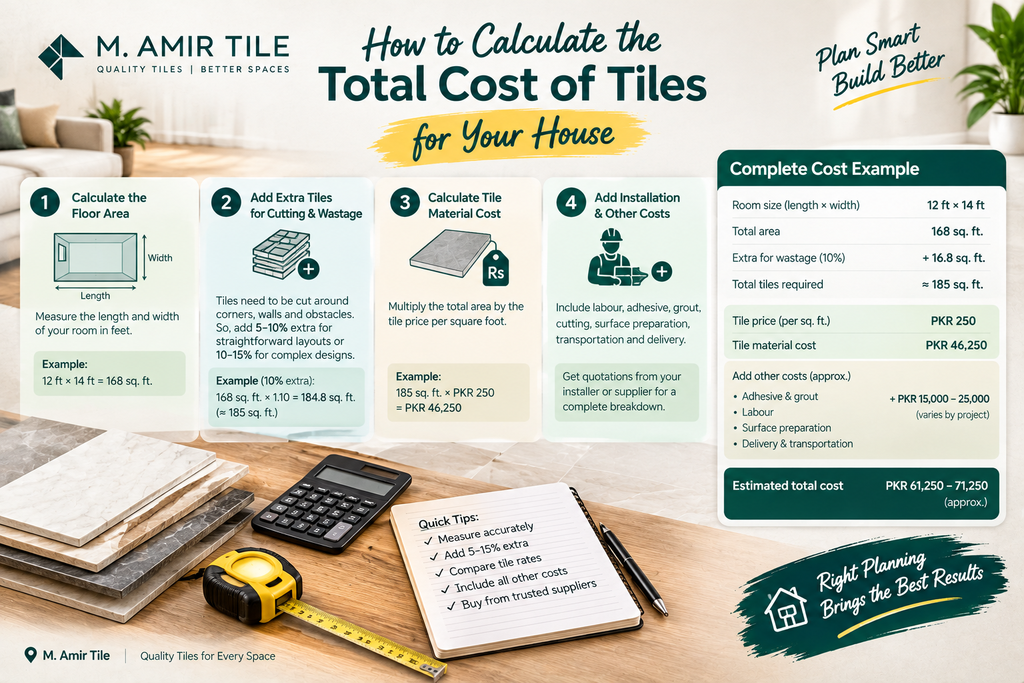
Follow these steps.
Step 1: Calculate the Floor Area
Measure the length and width of the room in feet.
Formula:
Floor area = Length × Width
For example, if your bedroom measures 12 feet × 14 feet:
12 × 14 = 168 square feet
Step 2: Add Extra Tiles for Cutting and Wastage
Tiles need to be cut around walls, doorways, corners, and other obstacles. Therefore, you should generally order extra material.
A useful starting estimate is:
- Straightforward layouts: around 5–10% extra.
- Complex layouts or diagonal patterns: around 10–15% extra.
The correct allowance depends on the layout, tile size, and installer’s advice.
For the 168-square-foot bedroom, assuming 10% extra:
168 × 1.10 = 184.8 square feet
You should therefore plan for approximately 185 square feet of tiles, rounded up to the available box coverage.
Step 3: Calculate the Tile Material Cost
Suppose the selected tile costs PKR 250 per square foot.
185 × PKR 250 = PKR 46,250
This is the estimated tile material cost only. It does not include labour, adhesive, grout, delivery, or other installation expenses.
Step 4: Add Installation and Other Materials
Ask your installer or supplier for separate quotations covering:
- Tile adhesive or an appropriate fixing material
- Grout and spacers
- Installation labour
- Floor levelling or surface preparation
- Cutting and finishing
- Transportation and delivery
This breakdown helps you compare quotations fairly instead of choosing a supplier based only on the tile price.
Practical Tile Budget Examples
The following examples show how tile costs change with the area and selected rate.
| Area | Tile rate | Tile material cost |
|---|---|---|
| 100 sq. ft. | PKR 150/sq. ft. | PKR 15,000 |
| 200 sq. ft. | PKR 200/sq. ft. | PKR 40,000 |
| 300 sq. ft. | PKR 250/sq. ft. | PKR 75,000 |
| 500 sq. ft. | PKR 350/sq. ft. | PKR 175,000 |
These examples exclude wastage and installation costs. For a realistic project budget, calculate the additional tile quantity first and then add labour and materials.
How to Choose the Right Tiles for Each Room
A good tile selection balances appearance, durability, cleaning requirements, and budget. Instead of selecting the same finish throughout the house, consider the needs of each space.
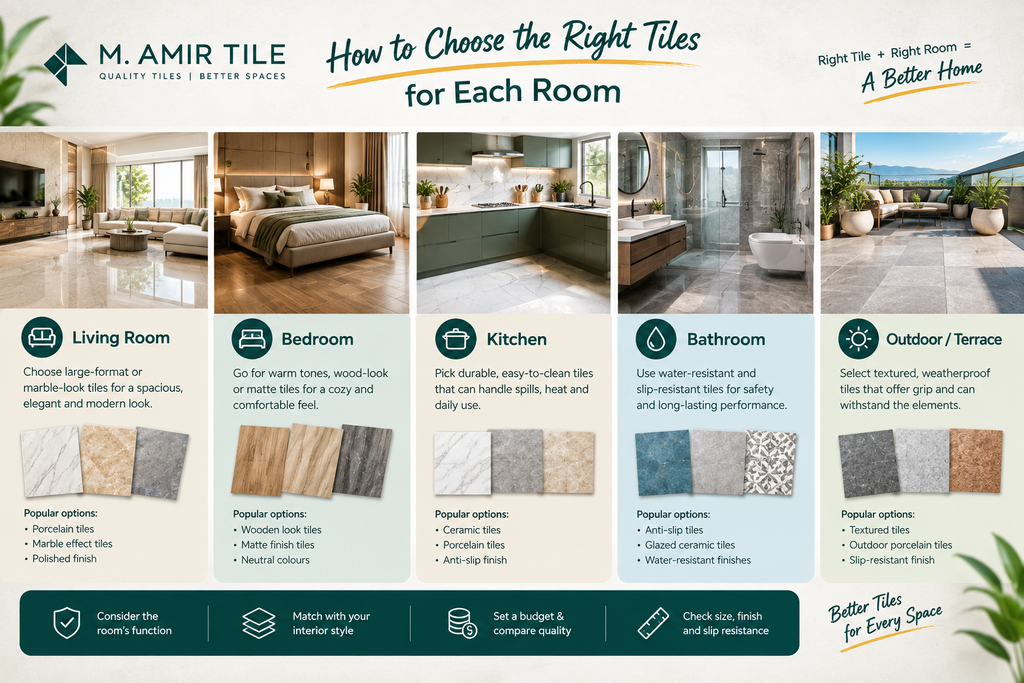
Living Room and TV Lounge
Living rooms are often the main visual focus of a home. Large-format porcelain tiles, marble-effect designs, and suitable polished finishes can create an elegant appearance.
However, consider the amount of natural light, furniture colours, cleaning requirements, and the room’s daily use.
Bedrooms
For bedrooms, choose tiles that complement the furniture, wall colours, and overall interior style.
Wooden-look tiles and neutral-coloured floor tiles are useful options for creating a warm, coordinated appearance. In addition, choose a surface that is comfortable to maintain.
Kitchen
Kitchen tiles should be easy to clean and appropriate for areas exposed to spills, grease, and regular foot traffic.
Use suitable wall tiles for backsplashes. For flooring, consider durability, cleaning, and slip resistance rather than selecting a glossy finish solely for appearance.
Bathroom
Bathrooms require particular attention to water exposure and slip resistance.
Choose wall tiles according to the desired appearance and cleaning requirements. For floors, check the product’s slip-resistance specifications and suitability for wet conditions.
Moreover, proper waterproofing, drainage, and installation are essential. Even good-quality tiles cannot compensate for poor waterproofing.
Roof, Terrace, and Outdoor Areas
Outdoor tiles experience sunlight, rain, temperature changes, and sometimes heavy foot traffic.
Therefore, select products specifically rated for the intended environment. Check slip resistance, water absorption, weather suitability, and the installation system before purchasing.
Why Proper Tile Adhesive Matters
Choosing the right tiles is only part of a successful tiling project. The fixing material and installation method also affect the finished result.
An unsuitable adhesive, poorly prepared surface, or incorrect application can contribute to weak bonding, hollow-sounding tiles, or tile failure.
When comparing tile adhesive products, consider:
- The type and size of the tile
- Whether the surface is a wall or floor
- Indoor or outdoor application
- Moisture and temperature conditions
- Compatibility with the substrate
- The manufacturer’s application instructions
Explore Tile Bond Options at M. Amir Tile
M. Amir Tile offers tile bond options including Case Bond, Hi Icon Tile Bond, and MAT Tile Bond. These products can be considered when planning a tile installation, subject to the suitability of each product for your particular application.
Before buying, confirm the current product specifications, packaging coverage, availability, and price. You can explore the M. Amir Tile bond collection to review available options.
For the best result, follow the manufacturer’s instructions and consult your installer about the appropriate fixing material for your chosen tile.
7 Mistakes to Avoid When Buying Tiles
Avoid these common mistakes to protect your budget and improve the finished result.
- Choosing only by price: A cheaper tile may not be suitable for the intended application.
- Ignoring the box coverage: Always calculate the price using the actual square footage stated on the packaging.
- Not ordering extra material: Cutting and breakage can increase the quantity required.
- Mixing different shades: Tiles from different batches may have visible colour variations.
- Ignoring slip resistance: Highly polished tiles may be unsuitable for some wet or outdoor areas.
- Forgetting installation costs: Adhesive, grout, labour, and surface preparation can add significantly to the total.
- Failing to confirm availability: Check that enough tiles from the same batch are available before placing your order.
Final Thoughts
Finding the right tiles in Pakistan is about more than comparing prices. You need to balance quality, design, room requirements, installation materials, and your overall budget.
Start by measuring your space, choosing the appropriate tile type, and comparing the cost per square foot. Then account for cutting waste, adhesive, grout, labour, and delivery before finalising your purchase.
M. Amir Tile can be a useful starting point for exploring tile bond products for your project. By checking product suitability and planning your material requirements carefully, you can make more confident decisions and achieve a finish that suits your home and budget.
Before placing your order, confirm the latest price, shade, grade, box coverage, and stock availability with your supplier.
Read more : How to Match Floor Tiles With Wall Tiles Without Making Your Home Look Busy
FAQ’s
What is the average price of tiles in Pakistan?
Tile prices vary by type, size, quality, and brand. Standard ceramic and porcelain tiles may cost around PKR 90–350 per square foot, while premium options can cost more.
Which tiles are best for homes in Pakistan?
Porcelain tiles are popular for floors, while ceramic tiles are often suitable for walls and selected floors. Choose according to durability, budget, and room requirements.
How can I calculate the cost of tiles for my home?
Multiply the floor area by the tile price per square foot, then add 5–10% extra for wastage. Include labour, adhesive, grout, and delivery in your total budget.
Where can I find tile bond products for my project?
You can explore the M. Amir Tile bond collection for Case Bond, Hi Icon Tile Bond, and MAT Tile Bond. Check current availability and product instructions to choose a suitable option for your installation.